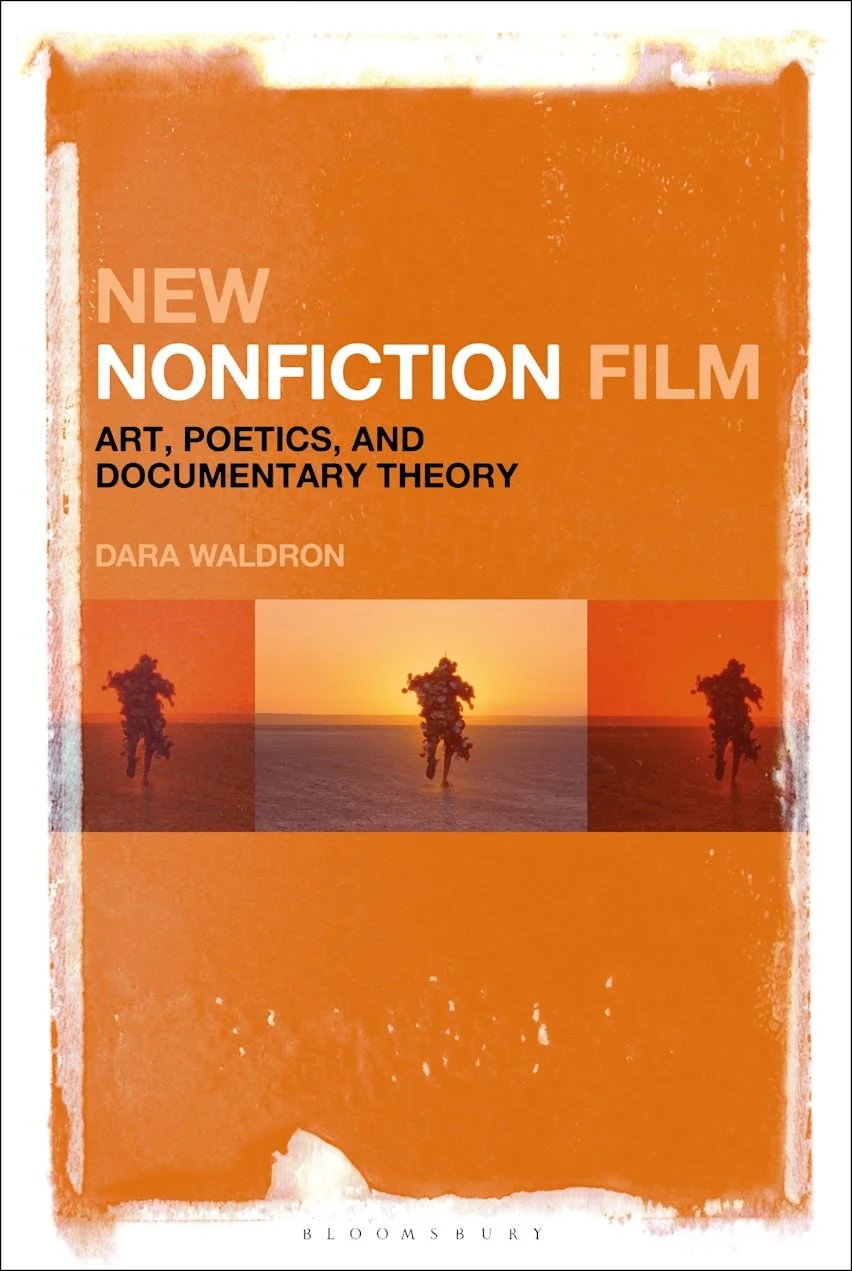
New Nonfiction Film Art, Poetics, and Documentary Theory
Description
New Nonfiction Film: Art, Poetics and Documentary Theory is the first book to offer a lengthy examination of the relationship between fiction and documentary from the perspective of art and poetics. The premise of the book is to propose a new category of nonfiction film that is distinguished from – as opposed to being conflated with – the documentary film in its multiple historical guises; a premise explored in case-studies of films by distinguished artists and filmmakers (Abbas Kiarostami, Ben Rivers, Chantal Akerman, Ben Russell Pat Collins and Gideon Koppel). The book builds a case for this new category of film, calling it the 'new nonfiction film,' and argues, in the process, that this kind of film works to dismantle the old distinctions between fiction and documentary film and therefore the axioms of Film and Cinema Studies as a discipline of study.
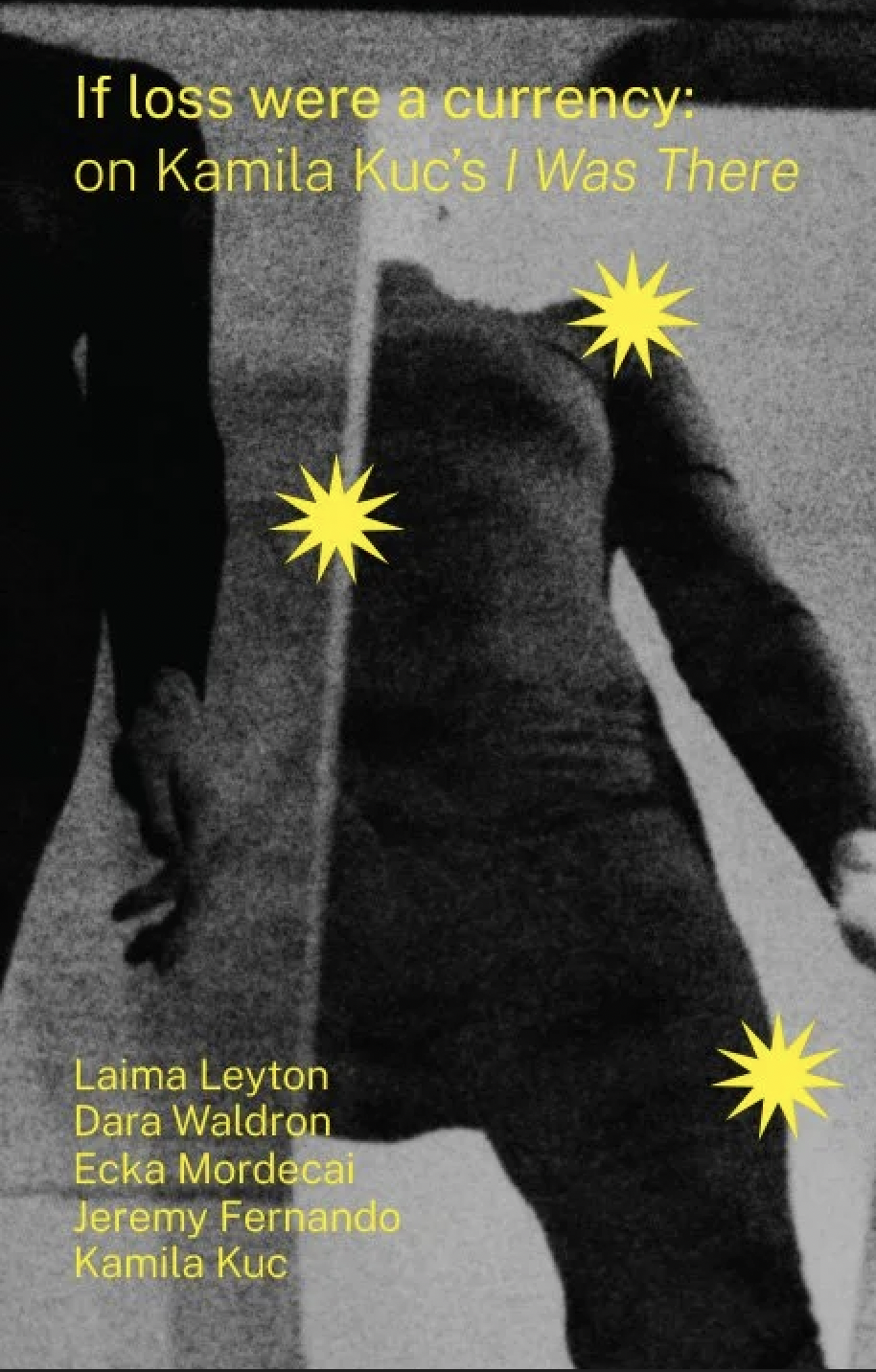
If Loss Were a Currency: on Kamila Kuc’s I Was There
Contributors
Kamila Kuc, Laima Leyton, Dara Waldron, Ecka Mordecai, Jeremy Fernando
Description
One sometimes wonders if silence speaks loudest not only because it signals to an absence, or an inability to articulate despite wanting to, but that it reminds us that even in whatever is said, uttered, yelled, there is always also a silence accompanying it, walking beside it, within it. And it be tales which hold on to these silences who speak loudest to us.
I Was There is one such tale. A story by Helena Kuc as inherited by — and simultaneously born(e) through — her granddaughter, Kamila Kuc, it is both from before and after her. So, two tales telling themselves in their own times and contemporaneously, with each other. Fully cognisant that what is lost in the telling, in all tellings, what remains silent, is the now — that remains for the ones who watch, the ones who listen, the ones who see.
That it be the ones attending to these tales — Laima Leyton, Ecka Mordecai, Dara Waldon, Jeremy Fernando, Kamila Kuc herself, and you — who hold on to this loss. A loss that is a currency: not just because it is traded, shared, but always also electric, charged. Where all of us run the risk of being charged and held accountable for — and potentially recharged and electrified by — opening ourselves to that loss.
Recent Outputs
Journal Articles and Book Chapters
‘Everybody’s Business’: Autoethnographic Inquiry and Intergenerational Trauma in 21st Century Personal Cinema' in: The Oxford Book of Personal Cinema' in: The Oxford Book of Personal Cinema, edited by Laura Busetti and Laura Rascaroli. (forthcoming in 2026).
'Vitae, Necisque, Potestas: Quentin Tarantino's Pulp Fiction (1994) and the Sacred Machinations of Exception' in: The Cinema of Quentin Tarantino: Essays on Race, Violence and History in the Films of a Pulp Auteur. Jefferson: McFarland, 2025.
'The Future is Mine: Post-Soviet Temporality in and through Kamila Kuc's Ethical Analogon' in: Found Footage Magazine, 10th Anniversary Edition.
'Film symbiosis: Embodied spectatorship and sensory (auto)ethnography in Lucien Castaing-Taylor and Ilisa Barbash’s Sweetgrass' in: The Moving Image Review & Art Journal Vol. 12 Issue 1 43-61. https://doi.org/10.1386/miraj_00105_1
'Review Essay: Documentary Across Platforms: Reverse Engineering Media, Place, and Politics, by Patricia R. Zimmerman. Indiana University Press, 2019, 288 pp.' in Alphaville: Journal of Film and Screen Media no. 22, 2021, pp. 82–85 DOI: https://doi.org/10.33178/alpha.22.06
Sense-value and the essay film: the speculative dimension of Dónal Foreman’s The Image You Missed (2018) in Studies in Documentary Film Vol. 17 (1) 1-13 https://doi.org/10.1080/17503280.2021.1883223